My Investing System
My Investing System
My Investing System
My Investing System
My Investing System
I can summarize my system in one sentence.
Go big on great companies at great prices during uptrends.
Buy retests. Buy moving averages. Hold.
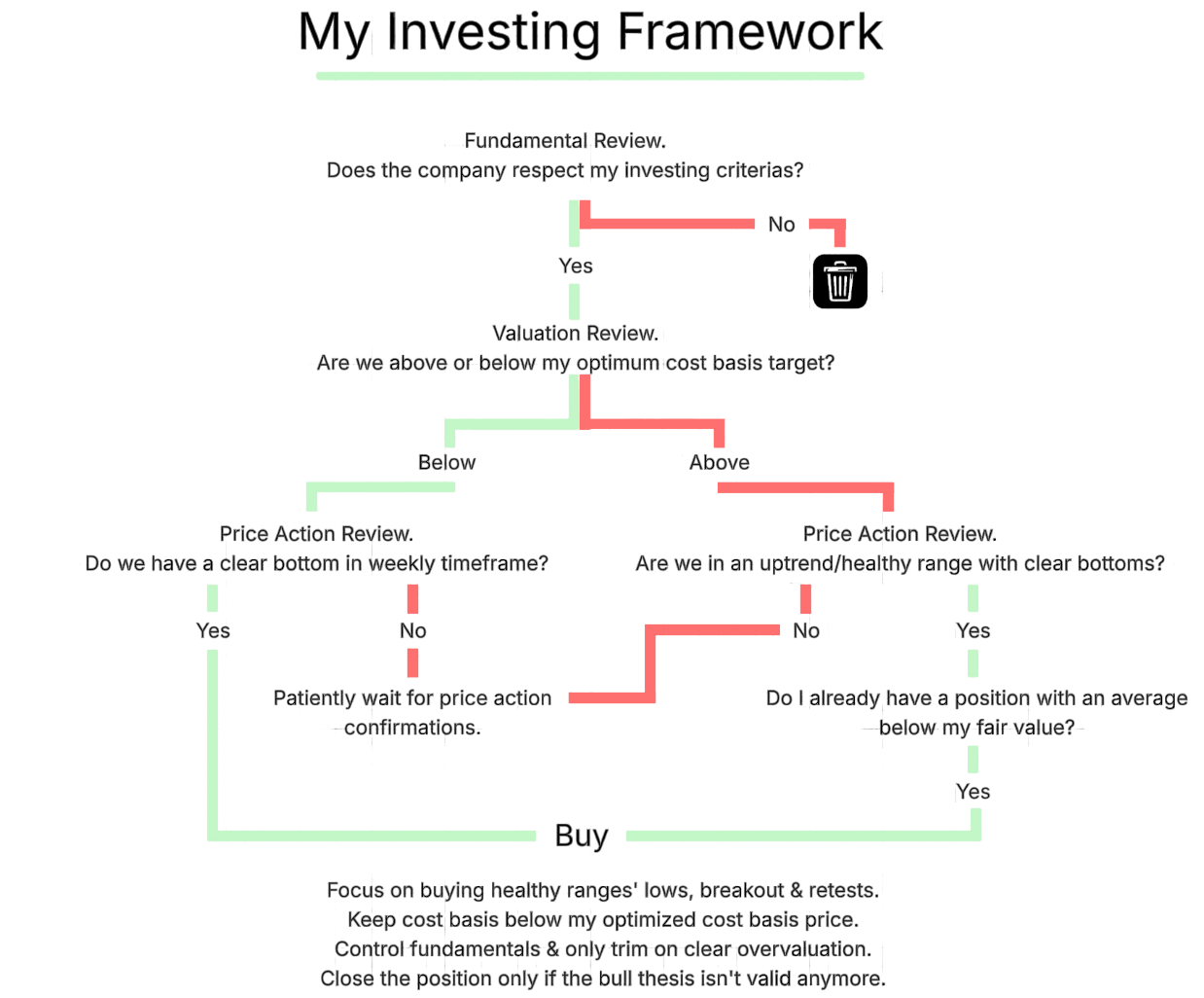
Fundamentals
I look for strong fundamentals & simple business models.
with a positive narrative. If I don’t love it, I move on.
It’s often better to own more of an excellent opportunity
than a “diversified” pile of mediocre ones.
Understanding a business is step one.
It builds convictions and helps identify potential
and what needs to be monitored
You sleep better when you know what you own and why.
Valuation is step two.
I use a simple framework based on growth, margins & multiples
This gives me an idea of a stock's fair value.
Valuation is just a fancy word for uncertainty.
No one knows what growth will look like in five years,
but we eventually have to take decisions.
I try to find the floor required to generate alpha
and then decide if the company can hit that floor.
I might be wrong 99% of the time,
but this keeps my positions healthy,
my prices reasonable & my FOMO in check.
If I am wrong, it’s at a reasonable price
and for a reasonable loss.
Price Action
Everything was detailed on the previous tabs.
I wait for ranges, breakouts and retests on moving averages.
I average my stock up, ride uptrends as long as they last - hopefully years.
I cut my losses rapidly.
I have clear thesis buying a stock, if anything goes wrong,
I'd rather get out and revisit later.
Capital preservation is key to live long in this game.
My job is to find the best opportunities and capitalize on them.
Option Basics
I use options regularly, always with a bullish bias.
Selling Puts
I commit to buying a stock at a specific price (the strike) by a specific date (expiration).
A buyer pays me a premium for this obligation.
Buying Calls
I pay for the right to buy a stock at a specific price by a specific date.
I pay upfront for potential upside.
The Strategy: Risk Reversal
I combine both selling a put and using the premium received to buy a call.
This allows me to build a bullish position without spending cash.
In exchange,
I accept the obligation to buy the stock if it falls below the put strike at expiration.
This means I need cash or margin available to cover the purchase if assigned.
If the trade goes well
I benefit from the uptrend without spending cash. Upside is unlimited thanks to the call.
As the stock rises, my collateral is freed for other opportunities.
If the trade goes wrong.
I either close the position early if my thesis was wrong and accept the loss.
Or I am assigned the shares at the strike price,
The loss then depends on when I sell those shares.
Why This Works for Me
I focus on quality businesses at attractive valuations.
Even if the trade moves against me, I end up owning a great company at a price I wanted.
If my thesis was wrong from the start, I have to accept the loss.
Fundamentals
I look for strong fundamentals & simple business models.
with a positive narrative. If I don’t love it, I move on.
It’s often better to own more of an excellent opportunity
than a “diversified” pile of mediocre ones.
Understanding a business is step one.
It builds convictions and helps identify potential
and what needs to be monitored
You sleep better when you know what you own and why.
Valuation is step two.
I use a simple framework based on growth, margins & multiples
This gives me an idea of a stock's fair value.
Valuation is just a fancy word for uncertainty.
No one knows what growth will look like in five years,
but we eventually have to take decisions.
I try to find the floor required to generate alpha
and then decide if the company can hit that floor.
I might be wrong 99% of the time,
but this keeps my positions healthy,
my prices reasonable & my FOMO in check.
If I am wrong, it’s at a reasonable price
and for a reasonable loss.
Price Action
Everything was detailed on the previous tabs.
I wait for ranges, breakouts and retests on moving averages.
I average my stock up, ride uptrends as long as they last - hopefully years.
I cut my losses rapidly.
I have clear thesis buying a stock, if anything goes wrong,
I'd rather get out and revisit.
Capital preservation is key to live long in this game.
My job is to find the best opportunities and capitalize on them.
Option Basics
I use options regularly, always with a bullish bias.
Selling Puts
I commit to buying a stock at a specific price (the strike) by a specific date (expiration).
A buyer pays me a premium for this obligation.
Buying Calls
I pay for the right to buy a stock at a specific price by a specific date.
I pay upfront for potential upside.
The Strategy: Risk Reversal
I combine both selling a put and using the premium received to buy a call.
This allows me to build a bullish position without spending cash.
In exchange,
I accept the obligation to buy the stock if it falls below the put strike at expiration.
This means I need cash or margin available to cover the purchase if assigned.
If the trade goes well
I benefit from the uptrend without spending cash. Upside is unlimited thanks to the call.
As the stock rises, my collateral is freed for other opportunities.
If the trade goes wrong.
I either close the position early if my thesis was wrong and accept the loss.
Or I am assigned the shares at the strike price,
The loss then depends on when I sell those shares.
Why This Works for Me
I focus on quality businesses at attractive valuations.
Even if the trade moves against me, I end up owning a great company at a price I wanted.
If my thesis was wrong from the start, I have to accept the loss.