My Investing System
My Investing System
What is Price Action?
What is Price Action?
What is Price Action?
This is where I lose “traditional” investors.
Many think you’re either a long‑term investor or a trader.
And investors shouldn't use price action.
Price action is just another tool.
It won't tell you what a company does. Or what they will do.
But it tells you something even more important.
What you should buy, and when.
What is price action?
The market is a consensus built from millions of interactions.
Price action is the visualization of that consensus.
Price action tells you who wants what, at what price and why.
It matters because you only make money if your stock goes up.
Let's go over the core concepts to use price action at our advantage.
Because yes, contrary to what many say.
You can time the market.
What you cannot time is the bottom.
Ranges, Breakouts, Retests & Averages
Those are the only concepts necessary to understand price action.
I rely on these concepts for two reasons.
Human behavior. Price action shows what participants are doing.
If price moves up, buyers are overwhelming sellers & vice-versa.
Self‑fulfilling prophecies: These patterns have been watched for centuries.
As many certain reactions on certain situation, they act accordingly.
Ranges
Stocks range when supply and demand finally match.
This is the first positive signal we look for: the bleeding has stopped.
This is where I lose “traditional” investors.
Many think you’re either a long‑term investor or a trader.
And investors shouldn't use price action.
Price action is just another tool.
It won't tell you what a company does. Or what they will do.
But it tells you something even more important.
What you should buy, and when.
What is price action?
The market is a consensus built from millions of interactions.
Price action is the visualization of that consensus.
Price action tells you who wants what, at what price and why.
It matters because you only make money if your stock goes up.
Let's go over the core concepts to use price action at our advantage.
Because yes, contrary to what many say.
You can time the market.
What you cannot time is the bottom.
Ranges, Breakouts, Retests & Averages
Those are the only concepts necessary to understand price action.
I rely on these concepts for two reasons.
Human behavior. Price action shows what participants are doing.
If price moves up, buyers are overwhelming sellers & vice-versa.
Self‑fulfilling prophecies: These patterns have been watched for centuries.
As many certain reactions on certain situation, they act accordingly.
Ranges
Stocks range when supply and demand finally match.
This is the first positive signal we look for: the bleeding has stopped.
This is where I lose “traditional” investors.
Many think you’re either a long‑term investor or a trader.
And investors shouldn't use price action.
Price action is just another tool.
It won't tell you what a company does. Or what they will do.
But it tells you something even more important.
What you should buy, and when.
What is price action?
The market is a consensus built from millions of interactions.
Price action is the visualization of that consensus.
Price action tells you who wants what, at what price and why.
It matters because you only make money if your stock goes up.
Let's go over the core concepts to use price action at our advantage.
Because yes, contrary to what many say.
You can time the market.
What you cannot time is the bottom.
Ranges, Breakouts, Retests & Averages
Those are the only concepts necessary to understand price action.
I rely on these concepts for two reasons.
Human behavior. Price action shows what participants are doing.
If price moves up, buyers are overwhelming sellers & vice-versa.
Self‑fulfilling prophecies: These patterns have been watched for centuries.
As many certain reactions on certain situation, they act accordingly.
Ranges
Stocks range when supply and demand finally match.
This is the first positive signal we look for: the bleeding has stopped.
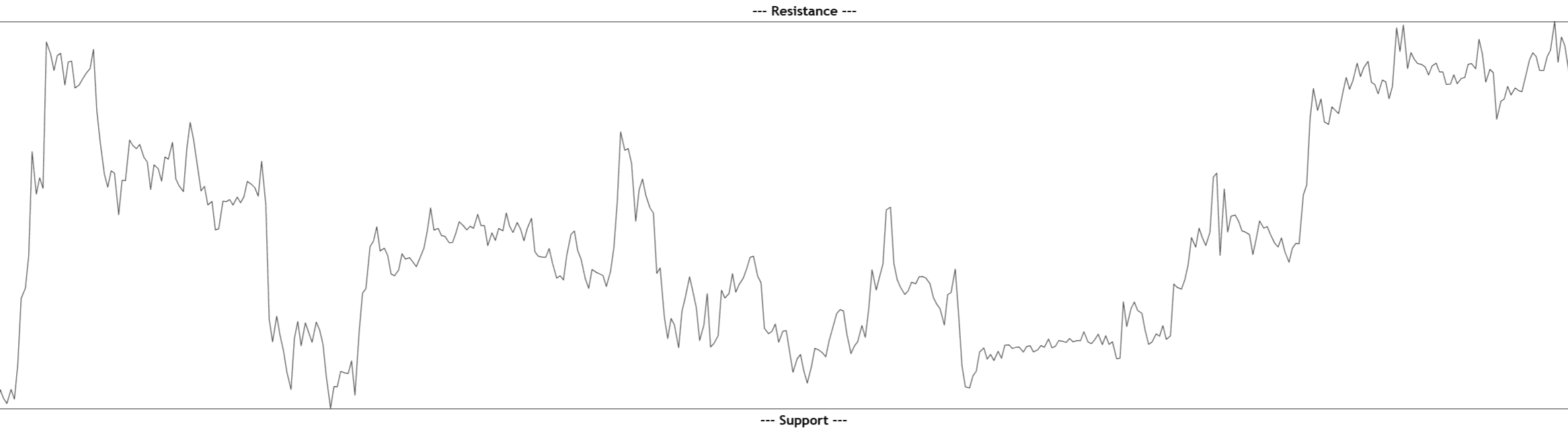
There are clear buyers at a certain level. Sellers at another one.
This is a handshake, nothing happens before catalysts materialize, bullish or bearish.
Breakout
A breakout happens when the handshake between buyers and sellers is gone.
It means some changed group, which push the balance one side.
A bullish breakout happens when buyers overwhelm sellers.
This means many agree to pay more for the same asset.
There are clear buyers at a certain level. Sellers at another one.
This is a handshake, nothing happens before catalysts materialize, bullish or bearish.
Breakout
A breakout happens when the handshake between buyers and sellers is gone.
It means some changed group, which push the balance one side.
A bullish breakout happens when buyers overwhelm sellers.
This means many agree to pay more for the same asset.
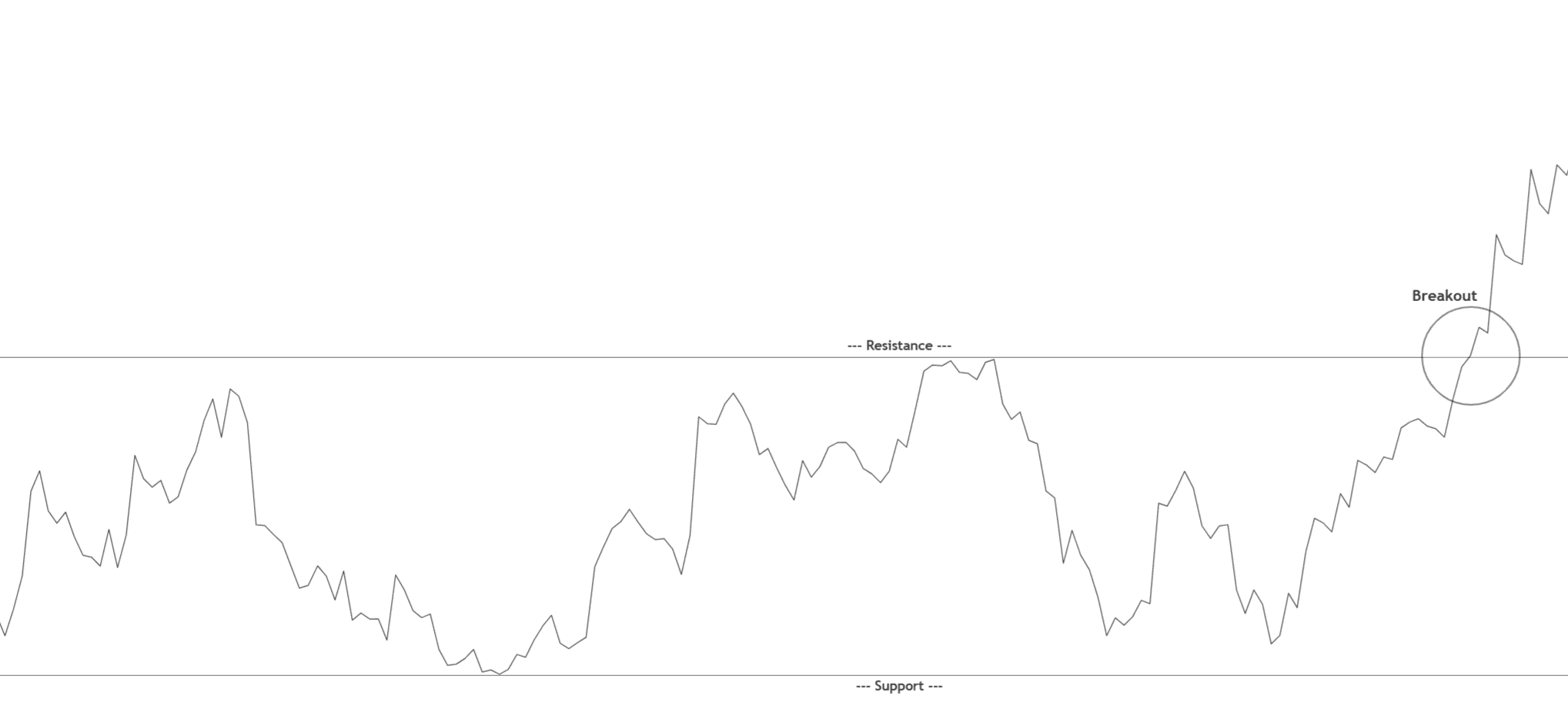
The chart tells you the narrative is changing.
This is the most important information.
Higher Highs & Higher Lows
This dynamic happens when buyers are in control.
When many accept to buy higher, and refuse to sell higher.
Here's an example and how to interpret the chart.
The chart tells you the narrative is changing.
This is the most important information.
Higher Highs & Higher Lows
This dynamic happens when buyers are in control.
When many accept to buy higher, and refuse to sell higher.
Here's an example and how to interpret the chart.
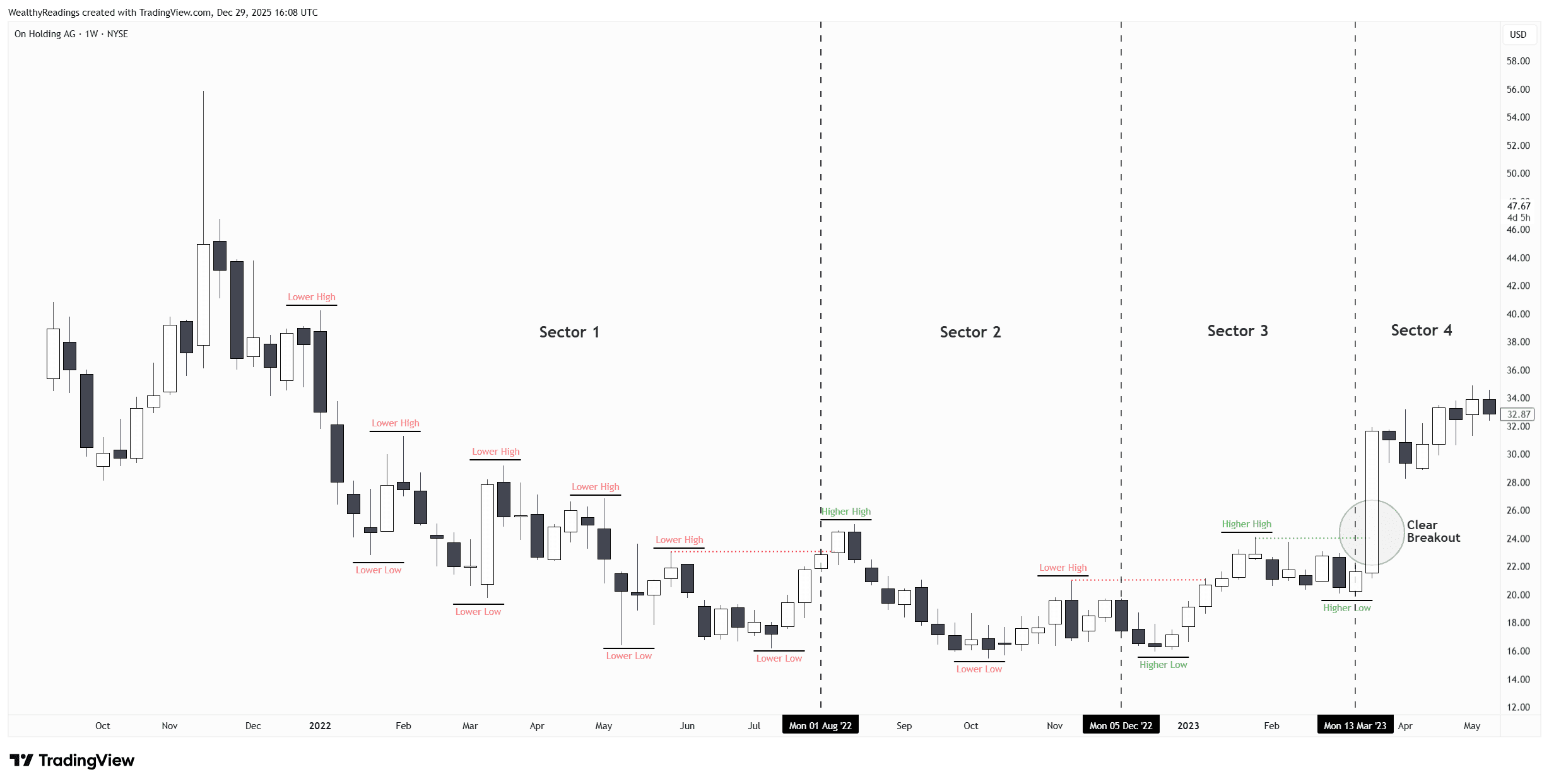
Sector 1 shows disinterest
The stock keeps falling because nobody wants to buy higher.
This stock isn't worth buying. It can be set on our watchlist at best.
Sector 2 shows exhaustion
Clear higher high in August after three close lows in October.
Sellers are tired, buyers start to show up.
It’s time to look a bit closer.
Sector 3 gives confirmations
the stock doesn’t retest its late 2022 low.
Buyers stepped in; they were impatient. They accepted a higher price.
That pushed the price even higher in January. Investors are now willing to pay more.
Sector 4 is the start of a bull trend
The market is ready to pay more for the stock and to hold it.
Buying at a higher price at the lows, at the highs, and holding longer.
Like you'd accept to pay more for something you really want.
Those are the most important concept: ranges, higher highs/lows, breakouts.
And what they mean in term of supply and demand dynamics.
How do we leverage them in investing?
By buying aggressively on those concepts.
Retests.
They happen due to classic market behavior.
When a stock shoots up to new highs, investors take profits.
For a moment, sellers outnumber buyers, price cools down.
It usually returns to a price buyers can't say no to.
If the uptrend is strong, that price is around earlier breakout.
Sector 1 shows disinterest
The stock keeps falling because nobody wants to buy higher.
This stock isn't worth buying. It can be set on our watchlist at best.
Sector 2 shows exhaustion
Clear higher high in August after three close lows in October.
Sellers are tired, buyers start to show up.
It’s time to look a bit closer.
Sector 3 gives confirmations
the stock doesn’t retest its late 2022 low.
Buyers stepped in; they were impatient. They accepted a higher price.
That pushed the price even higher in January. Investors are now willing to pay more.
Sector 4 is the start of a bull trend
The market is ready to pay more for the stock and to hold it.
Buying at a higher price at the lows, at the highs, and holding longer.
Like you'd accept to pay more for something you really want.
Those are the most important concept: ranges, higher highs/lows, breakouts.
And what they mean in term of supply and demand dynamics.
How do we leverage them in investing?
By buying aggressively on those concepts.
Retests.
They happen due to classic market behavior.
When a stock shoots up to new highs, investors take profits.
For a moment, sellers outnumber buyers, price cools down.
It usually returns to a price buyers can't say no to.
If the uptrend is strong, that price is around earlier breakout.
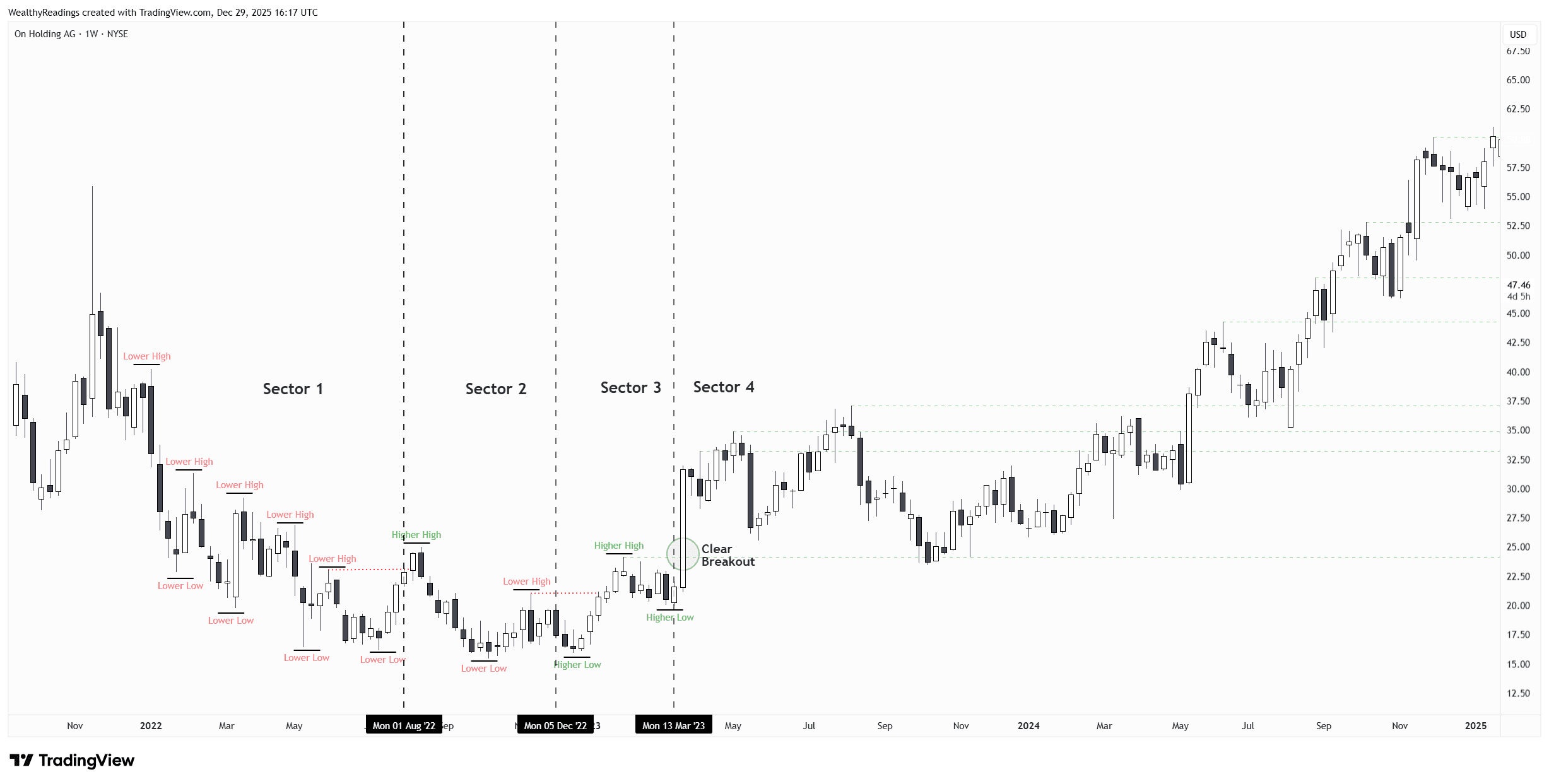
Every higher high after the breakout is marked by a green line.
Every time the stock pushed higher, it came back to that line, or very close.
That is when we buy.
And we do so until the trend stops.
In On Running’s case.
The uptrend lasted 88 weeks and returned 151%.
From the first retest in June 2023 to the top in January 2025.
It lasted 98 weeks and returned 222%
If you were more aggressive and bought Sector 3.
Moving Averages.
They’re smoothed‑out price action.
Three of them are watched religiously: the 21, 50 and 200.
They matter only because everyone looks at them.
They are self‑fulfilling prophecies.
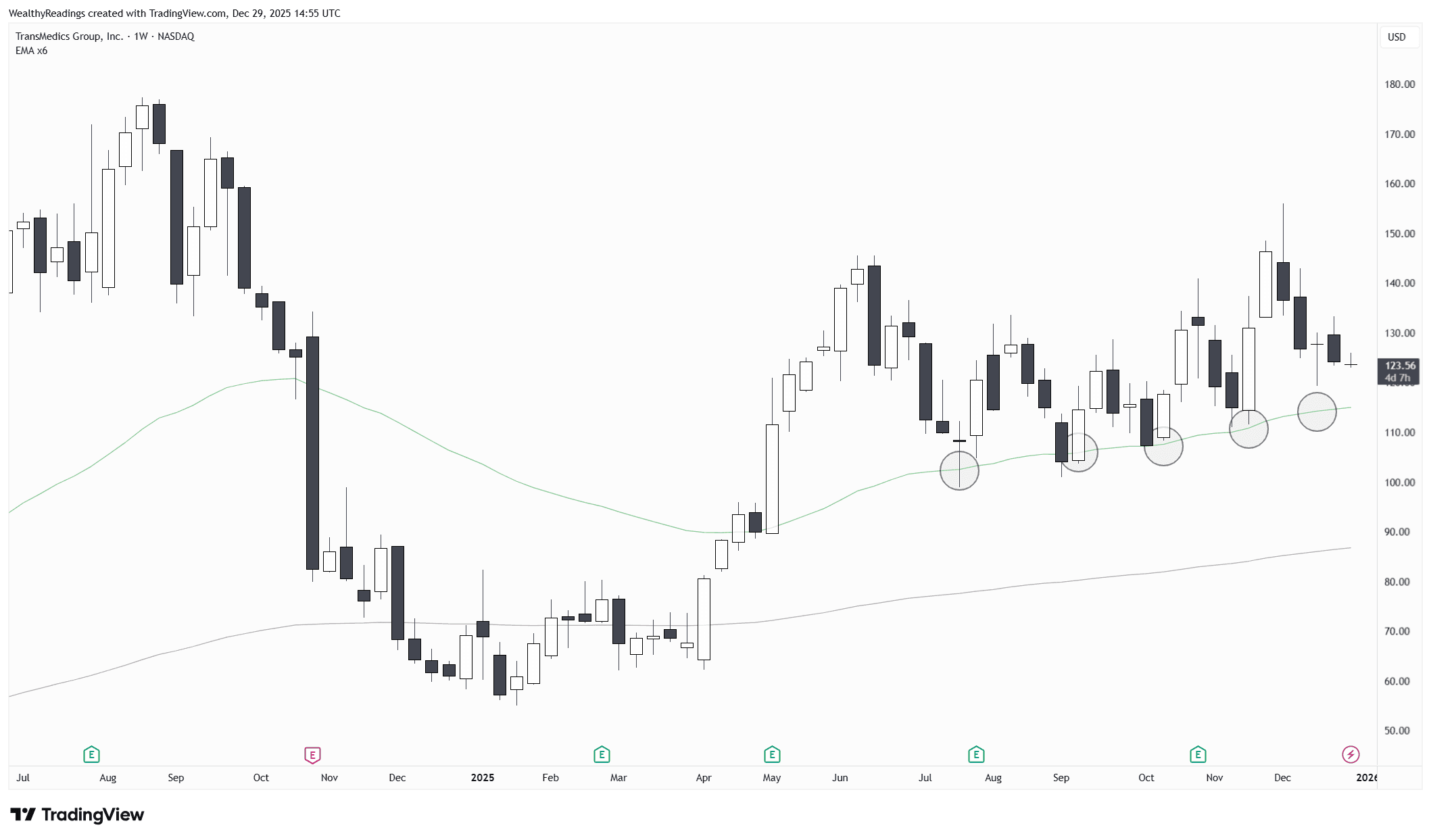
In TransMedics's case.
The last six months, buyers stepped in every time on the weekly 50.
That created a series of extremely healthy higher lows.
Coincidence?
Every higher high after the breakout is marked by a green line.
Every time the stock pushed higher, it came back to that line, or very close.
That is when we buy.
And we do so until the trend stops.
In On Running’s case.
The uptrend lasted 88 weeks and returned 151%.
From the first retest in June 2023 to the top in January 2025.
It lasted 98 weeks and returned 222%
If you were more aggressive and bought Sector 3.
Moving Averages.
They’re smoothed‑out price action.
Three of them are watched religiously: the 21, 50 and 200.
They matter only because everyone looks at them.
They are self‑fulfilling prophecies.
In TransMedics's case.
The last six months, buyers stepped in every time on the weekly 50.
That created a series of extremely healthy higher lows.
Coincidence?
There are no coincidences in a place where millions interact for hours every day.
There is only information.
Price action is the visual representation of buyers and sellers.
It tells you who wants what, and at what price.
That’s key information if you want to maximize returns.
Every stock has a “primary pattern” - the one most participants watch.
For some it’s breakouts, for others it’s moving averages.
There’s no one‑size‑fits‑all rule.
But there are universal principles.
This is how we can time the market.
We cannot time bottoms or tops.
But we can leverage trend and market information.
Money is made when stocks go up.
Everything else is noise.